
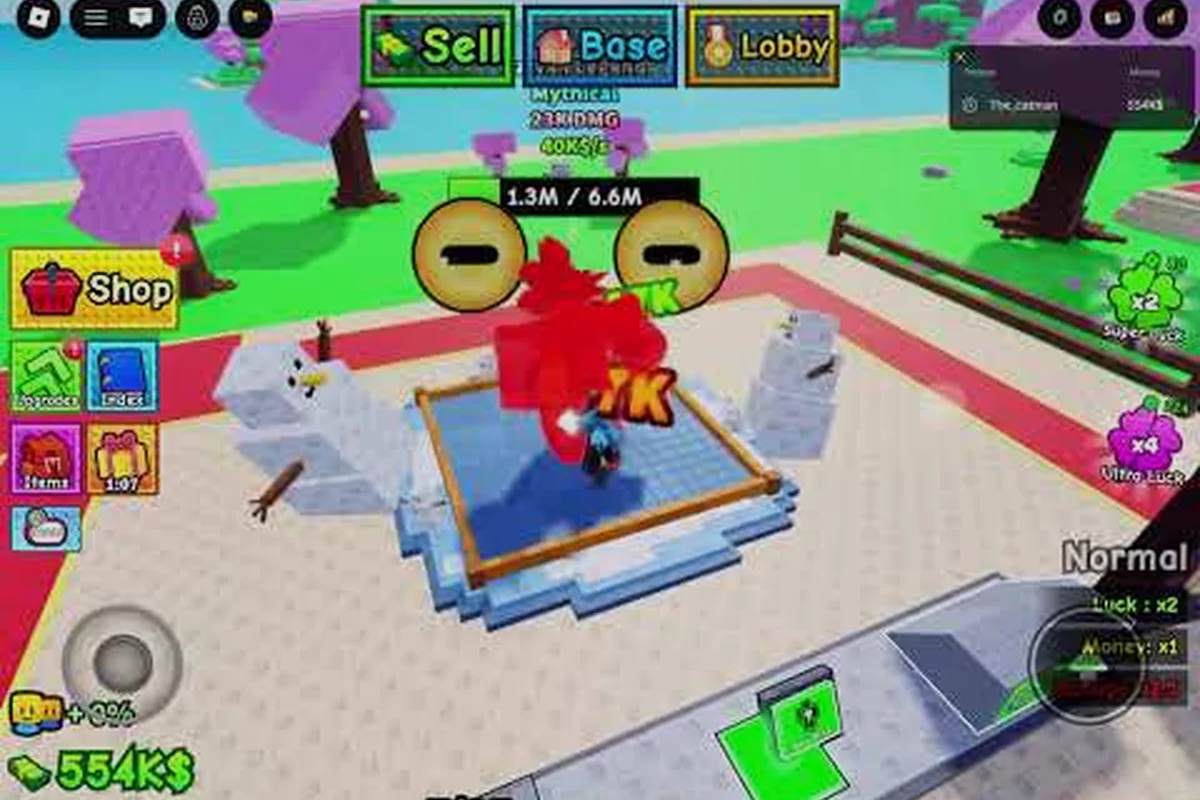
The roster of Beat the Anime Boss boss units decides everything from your idle income to your damage ceiling, so learning which drops to keep, which duplicates to feed, and which to sell outright is the fastest way to stop bleeding cash. Every boss you defeat leaves behind a character, and that character simultaneously fights for you, produces offline cash, and acts as the raw material for awakening — three jobs that overlap, but they don't all reward the same investment. A balanced inventory built around the awakened units in your roster will out-scale a random collection of Mythics that never get fed, because the unit multiplier stack compounds on a small set of heavily invested units rather than spread across dozens of un-leveled ones.
This guide walks through how boss units are acquired, how their rarity affects both base output and ceiling, when duplicates are worth keeping and when they should be fed into the awakening system, and how the final awakened unit transforms a mid-tier drop into a late-game carry. The framework below treats the game as a Fun and Giggles Games Roblox experience that the its official Roblox game page describes as a defeat-and-upgrade loop, with units as the persistent currency that keeps paying out long after the boss fight ends.
How Boss Units Drop and What They Actually Are
Every boss in Beat the Anime Boss — from the very first encounter to the late-game ladders — drops a unit on defeat, and that unit is the persistent character left behind after the anime villain falls. The official loop is straightforward: defeat a boss, collect its unit, place that unit in your formation, then upgrade it so the cash it generates while idle keeps climbing. According to the Beat the Anime Boss game page on Roblox, units earn money while the player is offline, which is why the game markets itself as both a clicker and an idle tycoon — your time away is just as productive as the time you spend grinding.
The drop itself is gated by rarity rather than by boss identity, which is why two players defeating the same boss can walk away with very different collections. Each drop rolls a rarity tier, the tier decides the base stat floor and the unit multiplier ceiling, and the Summoner level on your account caps how high that roll can climb. Public sources do not list a complete named unit roster, so rankings are best judged by role and rarity rather than by which specific anime character dropped, because the same name can appear in three different tiers depending on the day's luck.
| Rarity Tier | Base Stat Floor | Unit Multiplier Ceiling | Typical Use |
|---|---|---|---|
| Common | Lowest | x1 base output | Early fodder, sold for cash |
| Rare | Moderate | x2–x3 | Bridge unit for first 2 days |
| Epic | Strong | x4–x6 | Main roster backbone |
| Legendary | High | x7–x10 | Primary carries |
| Mythic | Highest | x10+ before awakening | Late-game anchors |
The base stat floor matters most when a unit is first placed, because the unit multiplier only starts compounding once the unit has been leveled and fed. A Mythic with no investment will underperform a fully leveled Epic within the first hour, and that gap is exactly what makes the decision about which duplicates to keep so important — your roster's strength is built from a handful of fully maxed units, not a wide bench of un-fed ones.
Rarity, Role, and the Unit Tier Decision
Reading Rarity as a Ceiling, Not a Starting Point
Rarity in Beat the Anime Boss is best read as a ceiling rather than a starting point, because every unit's effective output is the product of its base stat, its level, and the unit multiplier it gains from awakening. A freshly dropped Mythic is a promise of high output, not a guarantee, while a leveled Epic can outperform that Mythic for the first few sessions until the Mythic catches up through upgrades. Community testing reported by players shows that the gap between a freshly dropped Mythic and a leveled Epic narrows dramatically within the first 24 hours, then widens again once the Mythic reaches its awakening tier.
The table below is a practical decision frame, not a final ranking, because your specific Summoner level, active Luck Potion windows, and banner pacing will shift individual results.
| Account Stage | Keep | Feed Into Awakening | Sell |
|---|---|---|---|
| Day 1–2 | First Legendary/Mythic of any name | Duplicates of your first Epic+ | All Common duplicates, low-stat Rares |
| Day 3–5 | Best two Epic+ across all bosses | All duplicates of those two | Any Common, off-role Rare |
| Day 6–10 | All Mythic/Legendary, top 3 Epic | All duplicates of your top 3 | Off-role Epic, all Common |
| Day 11+ | Top 6 across rarity, role-balanced | All duplicates of the top 6 | Anything outside the top 6 |
The role balance is what makes this stage-dependent. Your income depends on at least one high-cash unit, your damage depends on at least two carry units, and the awakening system rewards feeding duplicates into a small core rather than spreading resources across a wide bench. Players who try to keep every Mythic end up with a roster where no single unit has enough duplicates fed into it to cross the second awakening threshold, which is where the unit multiplier jumps from x4–x6 to x7+.
The Unit Tier Logic in Practice
The unit tier conversation in Beat the Anime Boss is less about declaring a single best unit and more about how each role ranks against itself. Damage dealers compete with damage dealers, income units compete with income units, and hybrid units are evaluated by how they perform in both roles under your specific account conditions. The Beat the Anime Boss unit tier list covers the role-by-role breakdown in detail, but the working rule for any boss unit drop is that tier placement only matters relative to your current roster.
| Role | Day 1–2 Tier | Day 6–10 Tier | Late-Game Tier |
|---|---|---|---|
| Damage carry | First Legendary/Mythic | Top 2 Epic+ with duplicates fed | Top 3 Mythic/Awakened, role-specialized |
| Income engine | First Rare that out-earns your Common | First Epic+ dedicated income unit | Awakened income carry with potion stack |
| Hybrid | One Rare you can't replace | One Epic with balanced stats | Awakened hybrid for slot efficiency |
| Fodder | Everything else | Low-stat duplicates | Sell-only |
The hybrid role is where most accounts leave cash on the table, because hybrid units feel like a compromise rather than a specialization, and players tend to bench them in favor of single-role carries. A well-leveled hybrid can hold a slot that would otherwise need two single-role units, which frees inventory space for more boss units overall — and inventory space is itself a bottleneck, because storage caps force a sell-versus-feed decision on every duplicate that lands.
Duplicates, Selling, and the Path to Unit Awaken
When to Keep Duplicates and When to Feed Them
The duplicate question is where most new accounts either accelerate or stall, because the awakening system rewards feeding copies of the same unit into one slot, but the temptation to keep every Epic or higher is strong on a small roster. The rule of thumb that holds up across community testing is to keep your first two Mythics and first three Legendaries, and to keep one Epic per role until you have a full roster of six, then start feeding duplicates instead of stockpiling them.
| Rarity | Keep as Duplicates (Max) | Feed to Awakening | Sell |
|---|---|---|---|
| Common | 0 | N/A | All immediately |
| Rare | 1 | 2nd copy onward | Off-role copies after 2 |
| Epic | 1 (best in role) | 2nd–3rd copies | 4th copy onward |
| Legendary | 2 | 3rd copy onward | 5th copy onward |
| Mythic | 3 | 4th copy onward | 6th copy onward |
The reason for the asymmetric "keep" caps is that lower-rarity duplicates have less of an awakening payoff per copy fed, while higher-rarity duplicates compound more aggressively through the awakening system. Feeding three Common duplicates into a Common unit won't move the unit multiplier meaningfully, but feeding three Mythic duplicates into a Mythic unit can push the awakened unit into a x15+ multiplier bracket. The progression of feeding also shifts how the unit behaves: early feeds are cheap and visible, late feeds are expensive but transform the unit's role from "carry" to "late-game anchor."
Selling Units for Cash vs Feeding for Awakening
The sell-versus-feed decision is the same question asked at a different point in the awakening curve. A duplicate that you'd otherwise feed to awakening can be sold for immediate cash, and that cash funds the upgrade path on the unit you are keeping. The frame that holds up across the community is: sell duplicates of units you're not investing in, feed duplicates of units you've already decided to anchor your roster around. The Beat the Anime Boss unit fusion guide covers the related fusion loop, but selling and feeding are the two sides of the same economic decision.
| Account Stage | Sell Priority | Feed Priority |
|---|---|---|
| Day 1–2 | All Common, off-role Rare, any duplicate of a unit you won't keep | First duplicate of a unit you will keep |
| Day 3–5 | Any duplicate of a unit outside your top 3 | Duplicates of your top 3 carries |
| Day 6–10 | Off-role Epic, any duplicate outside top 6 | Top 6 duplicate feeds |
| Day 11+ | Anything outside the top 6, off-role duplicates | Only the top 6 get fed |
The hidden variable in this decision is the cost of the next awakening level on the unit you're feeding. If your Mythic is one duplicate away from the third awakening threshold, that one duplicate is worth more than the cash you'd get from selling it, because the third threshold is where the unit multiplier crosses into the bracket that makes a single unit outperform two non-awakened Mythics. If, on the other hand, the unit is far from the next threshold and the cash would let you level the Summoner or push another upgrade, the sell call is correct.
The Awakened Units and Their Unit Multiplier Payoff
What Awakened Units Actually Change
An awakened unit is what a fully fed boss unit becomes once enough duplicates and awakening materials have been invested in it, and the transformation is large enough to change the unit's role on your roster. The awakened version keeps the same name and the same role, but the unit multiplier it provides is roughly 2x–3x the non-awakened ceiling, which means a Mythic that would have capped at x10 suddenly operates in the x20–x30 range. Community testing shows that the multiplier jump is steepest at the second and third awakening thresholds, with diminishing returns at the fourth and fifth, which is why most players target the third threshold as the "done" state for any single unit.
| Awakening Threshold | Duplicate Cost (Rough) | Unit Multiplier Bracket | Strategic Meaning |
|---|---|---|---|
| 1st | 2 duplicates | x1.5x base | Visible damage/income lift |
| 2nd | 4 duplicates total | x2x base | Carry becomes anchor |
| 3rd | 7 duplicates total | x3x base | Late-game viable |
| 4th | 11 duplicates total | x3.5x base | Optimization, not progression |
| 5th | 16 duplicates total | x4x base | Whales only |
The numbers above are community-reported ballpark costs, because the exact duplicate cost shifts with each patch, and the unit multiplier is calculated on top of your existing level and rarity. The strategic meaning is the part that doesn't shift: the third threshold is where the awakened unit becomes irreplaceable, and the fourth and fifth are for accounts that have already cleared the rest of the late-game ladder. If you're still pushing your first three Mythics toward their third threshold, feeding into a fourth or fifth threshold on a single unit is a misallocation.
Building a Roster Around Awakened Units
The roster around awakened units should be small and role-balanced, because each awakened slot competes with the rest of your formation for damage uptime and idle income. A common late-game build is two awakened damage carries, one awakened income engine, and three hybrid slots that hold the second-best units of each role. The Beat the Anime Boss unit guide covers the formation side of this in more depth, but the duplicate-management angle is that each awakened slot in the late-game build is responsible for absorbing 7–11 duplicates of itself, which means the bench should be empty of those units by the time the build is complete.
| Roster Slot | Role | Awakening Target | Duplicate Investment |
|---|---|---|---|
| Slot 1 | Primary damage | 3rd threshold | 7 Mythic duplicates |
| Slot 2 | Secondary damage | 2nd–3rd threshold | 4–7 Mythic duplicates |
| Slot 3 | Income engine | 3rd threshold | 7 Mythic duplicates |
| Slot 4 | Hybrid anchor | 2nd threshold | 4 Epic+ duplicates |
| Slot 5 | Hybrid support | 1st–2nd threshold | 2–4 Epic duplicates |
| Slot 6 | Flex | 1st threshold | 2 duplicates of any role |
This is not the only valid build, but it's the one that holds up across most account types, because it pairs a dedicated income engine (which funds the rest of the roster) with two carries (which push the boss ladder) and three flex slots (which absorb whatever the next boss drops). The awakened units in slots 1, 2, and 3 are the ones that justify keeping duplicates; the slots 4–6 are deliberately capped at lower thresholds so the account can absorb new drops without starving the top three.
How Inventory Pressure and Storage Caps Force the Sell vs Keep Decision
Why Storage Caps Decide Your Boss Unit Strategy
The storage system in Beat the Anime Boss is the silent constraint behind every keep-versus-sell decision, because every unit you keep occupies a slot, and the cap on slots is finite. When the cap is full, the game stops accepting new drops, which means a full inventory directly costs you boss units that would have otherwise rolled into your roster. The defensive play is to keep storage at 80% of the cap at all times, which leaves a buffer for high-rarity drops that you don't want to lose. The Beat the Anime Boss b-tier units ranking discusses what the bottom of the roster actually looks like, and most of those units are the ones that should be the first sold when storage tightens.
| Storage State | Action |
|---|---|
| < 60% of cap | Keep all Rare+, sell Common duplicates |
| 60–80% of cap | Sell all Common, off-role Rare, low-stat Epic |
| 80–95% of cap | Sell off-role Epic, low-stat Legendary duplicates |
| > 95% of cap | Sell anything outside top 6 immediately |
The 80% rule is the most important number on that list, because that's the point at which a sudden Mythic drop would either push you over the cap or force a panic sell of a unit you actually want. A panic sell at 95% of cap almost always costs more than the disciplined sell at 80% would have, because the panic sell happens on a high-rarity unit you were hoping to feed, while the disciplined sell happens on a Common or off-role Rare whose sale you can absorb.
Common Storage Mistakes to Avoid
The most common mistake is treating storage as infinite until the cap is hit, then reacting with a panic sell. The second most common is keeping one of every Legendary "just in case," which fills the bench with units that will never be fed and that block the slots you need for duplicates of the units you actually want to awaken. The third is keeping duplicate Common units because they "might be useful later," which is a trap because the awakening payoff on Common duplicates is too small to justify the storage cost.
A practical fix is to schedule a weekly inventory review at the same time you redeem codes and check the its Roblox group hub for announcements, which keeps the rhythm tied to the developer's update cycle. During the review, sell anything outside the top 6 by role, feed any duplicates of the top 6 that you're still investing in, and leave the bench empty for the next boss ladder push.
Frequently Asked Questions
What is the difference between boss units and awakened units in Beat the Anime Boss?
A boss unit is the character that drops when you defeat a boss, while an awakened unit is what that boss unit becomes after enough duplicates and awakening materials have been fed into it. The awakened version keeps the same role but operates at a roughly 2x–3x higher unit multiplier than the non-awakened ceiling, which is why the awakened units in your roster are the ones that anchor the late-game build.
Should I sell duplicate Mythics or keep them for awakening?
The default answer is to keep them and feed them toward the third awakening threshold, because the third threshold is where the unit multiplier crosses into the bracket that makes a single awakened Mythic outperform two non-awakened Mythics. The exception is if you're already at the third threshold on that unit and pushing for a fourth, in which case selling the surplus for Summoner levels or upgrade cash is often the better call.
How many duplicates do I need to awaken a unit in Beat the Anime Boss?
The community-reported ballpark is 2 duplicates for the first threshold, 4 for the second, 7 for the third, 11 for the fourth, and 16 for the fifth, though the exact cost shifts with each patch. The third threshold is the practical target for most accounts, because the multiplier payoff past that point diminishes relative to the cost.
What should I do with Common and Rare boss units I don't need?
Sell them as soon as they're identified as off-role, because their awakening payoff per duplicate fed is too small to justify the storage cost, and their cash value funds upgrades on the units you are keeping. The exception is your first Rare of a role, which can be kept as a bridge unit until your first Epic of that role drops.
Does the Summoner level affect which boss units I get?
Yes, the Summoner level caps the rarity of units that come out of a summon, which means a low Summoner level will see mostly Common and Rare drops even from late-game bosses, while a high Summoner level opens the door to Legendary and Mythic rolls. Raising the Summoner level is therefore part of the same progression as raising the units themselves, and the two upgrades should be paced together rather than prioritized one over the other.