
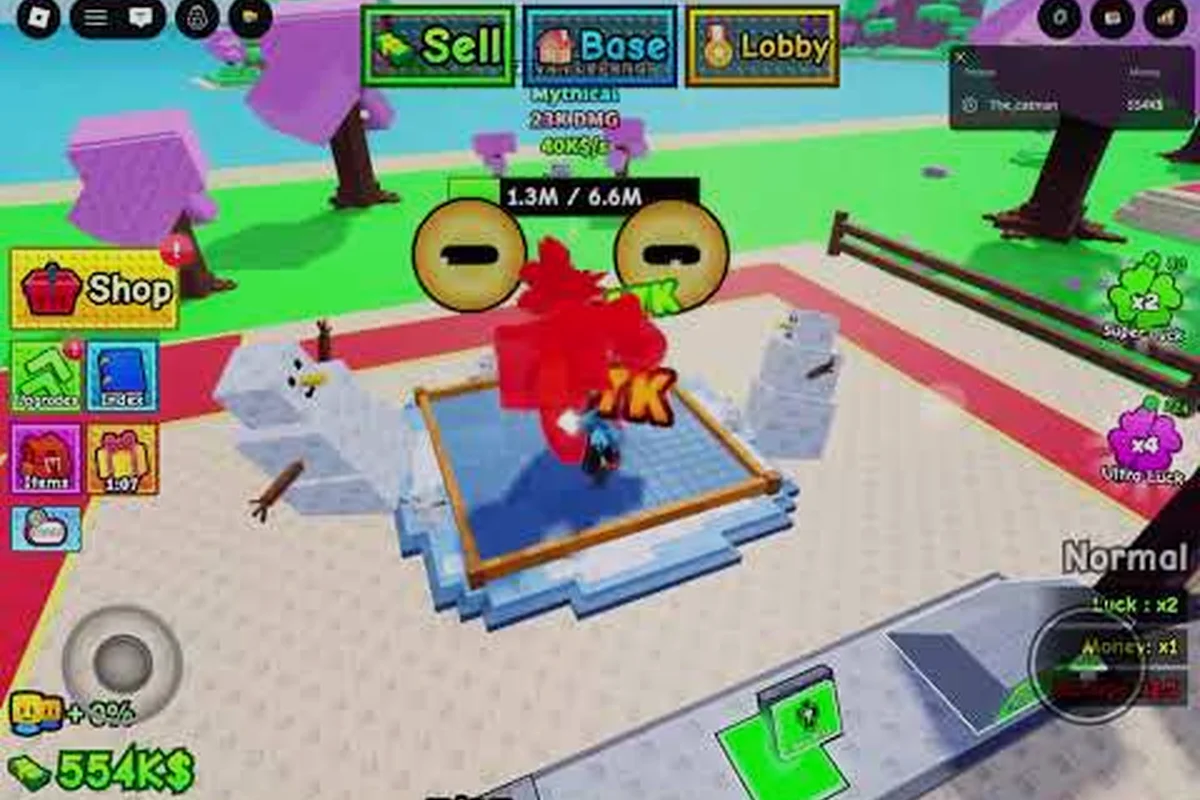
A Beat the Anime Boss efficiency guide starts where the tycoon loop actually moves the needle: offline cash flow, raid unlock gates, and the stat-scaling rules that decide whether a run feels slow or fast. Players who treat this Roblox title as a pure active grinder stall out, because the loop rewards accounts that plan idle windows, lock upgrade order, and understand the math behind their units. This guide breaks down the numbers that matter, the order in which content unlocks, and the points where damage scaling reshapes your build.
Why Efficiency Beats Active Grinding in This Tycoon
The core loop of Beat the Anime Boss is built on units that earn while you are logged out. The the title's official Roblox game listing confirms offline earnings as the headline mechanic, and the developer Fun and Giggles Games even sells a dedicated x2 Offline Rewards game pass that doubles that return. That single design decision reframes the entire account: an active-only player leaves cash on the table every minute they could be away from the keyboard, and a player who plans idle windows turns time itself into a currency.
Cash then drains into two competing sinks. You can pump it into individual unit levels, which raises the per-second output of that specific unit, or into the Summoner meta-progression track, which lifts the floor on rolls and unlocks higher-tier rewards for the entire roster. Most new players dump everything into their first shiny unit, which feels productive but actually underperforms, because the Summoner sink is the one that lifts the entire account and makes idle windows compound. The Beat the Anime Boss upgrade priority guide walks through the exact split.
The Three Levers That Drive Idle Income
There are exactly three knobs that change how much cash you bank per hour away from the game, and the order you pull them matters more than the magnitude of any single pull.
| Lever | What It Controls | Approximate Payback | Best Time to Pull |
|---|---|---|---|
| Unit Levels | Per-unit income multiplier | 2-4 hours of idle cash at mid-game | After Summoner floor is set |
| Summoner Levels | Roll quality + account-wide unlocks | Long-term, compounds forever | Earliest — first 30 minutes of play |
| x2 Offline Pass | Doubles all logged-out earnings | Pays back inside one long break | When you know you will be away 4+ hours |
Players who pull the Summoner lever first see slower income per hour but faster roster growth, which then compounds when they circle back to unit levels. The opposite order feels snappy for a day and then plateaus, because every fresh roll still lands on the same low floor.
Idle Income Math: How the Numbers Actually Work
Beat the Anime Boss tycoon mechanics layer three multipliers on top of each other, and reading them wrong is the single most common reason players think the game is broken when their cash flow stalls. The chain looks like this: Base Income × Unit Level Multiplier × Summoner Multiplier × (Offline Modifier if away) × Event Modifier. Each link is multiplicative, so raising the wrong one wastes gold that could have moved the entire chain.
Reading the Multiplier Chain
| Layer | Typical Mid-Game Value | Typical Late-Game Value | Source |
|---|---|---|---|
| Base Income (per unit) | $1-$10/s | $50-$500/s | Unit rarity tier |
| Unit Level Multiplier | 1.2x-3x | 5x-15x | Cash sunk into that unit |
| Summoner Multiplier | 1.5x-2.5x | 4x-8x | Account-wide meta level |
| Offline Modifier | 0.5x logged out | 1.0x logged out, 2.0x with pass | Game pass purchase |
| Event Modifier | None normally | 1.5x-3x during boosts | Limited windows |
A player with a base income of $5/s, a 2x unit level multiplier, a 2x Summoner multiplier, and no pass earns $20/s active. Logged out, that drops to $10/s. With the x2 pass, it becomes $40/s while away. Same account, same units — the only change is the multiplier chain and the pass, and the difference between active grinding for an hour and walking away for an hour triples from $20 to $72,000 logged out.
Community testing on the Discord suggests the offline modifier ticks at a smooth rate rather than in lump sums, which is why logging out for a full 8-hour sleep window produces more visible jumps than the same 8 hours broken into four 2-hour breaks. The the official Discord hub threads about idle math are where most of this nuance gets refined, because patch notes rarely document multiplier chain changes.
Idle Window Planning
Treat your account as a bank account that accrues interest on cash you have already earned. The interest rate is set by your Summoner level, and the principal is set by your top units. A 30-minute active session is rarely worth more than the next 8-hour logged-out window, so the move is to plan playtime around check-ins rather than continuous grinding.
| Session Type | Optimal Length | Cash Return Shape | Best Use |
|---|---|---|---|
| Active burst | 15-30 min | Linear, capped by current units | Roll new units, claim events |
| Short break | 1-2 hours | Modest idle tick | Rebuy upgrades after idle return |
| Long break | 6-10 hours | Large idle tick, x2 pass kicks in fully | Reset for next day login |
| Overnight | 8 hours | Maximum efficient idle window | The single highest-ROI moment |
Stats Explained: What Each Number Actually Does
Beat the Anime Boss stats explained properly means separating per-unit stats from account-wide stats, because mixing them up is what causes players to level the wrong units. Unit stats apply only to that single unit's income and damage output, while Summoner stats apply to the entire roster and to roll quality.
Per-Unit Stat Breakdown
| Stat | What It Does | Scaling Behavior | Priority |
|---|---|---|---|
| Damage | Per-hit output vs bosses | Linear with level, exponential with rarity | High for raid clear speed |
| Income/s | Passive cash per second | Linear with level, scales with rarity | High for idle windows |
| Crit Chance | Chance to double-tick income or damage | Soft-capped above 30% | Medium |
| Range | Hit reach against bosses | Mostly fixed by unit type | Low |
| Speed | Attack interval | Soft-capped | Low |
A unit with high base damage but low income/s is a raid unit, not an idle unit. A unit with high income/s but mediocre damage is an idle unit, not a raid unit. Mixing those two roles is the most common stat mistake, because the display screen does not flag which is which.
Account-Wide Summoner Stats
| Stat | What It Does | Why It Matters |
|---|---|---|
| Summoner Level | Unlocks higher rarity in the roll pool | Each level widens the top end of what you can pull |
| Luck Bonus | Adds % to all roll outcomes | Stacks multiplicatively with potion buffs |
| Cash Multiplier | Boosts every cash tick on the account | The single biggest idle-income driver |
| Damage Multiplier | Boosts every damage tick on the account | Lets lower-rarity units stay relevant longer |
The cash multiplier on the Summoner track is the only stat that affects idle income directly, which is why pulling the Summoner lever first creates a long-term tax cut on every hour you log out. Beat the Anime Boss damage scaling operates the same way at the raid tier — a Summoner that lifts damage across the account is worth more than one fully-leveled rare unit for farming mid-game raid bosses.
Raid Progression and Unlock Order
Beat the Anime Boss raid progression is gated by Summoner level, not by raw cash, which is the second most common progression trap. Players who grind a single boss for hours hit a wall and assume the boss is bugged, when in reality the gate is a Summoner level they have not yet reached. The official page lists the loop as defeat, collect, upgrade, level Summoner, chase mutates — in that order — which is also the order in which content unlocks.
Raid Unlock Tiers
| Raid Tier | Approx. Summoner Level | First Clear Reward | Why It Matters |
|---|---|---|---|
| Tier 1 | 1-5 | Starter unit + small cash | Tutorial tier, finishes fast |
| Tier 2 | 6-15 | Mid-rarity unit | Unlocks the fusion bench |
| Tier 3 | 16-30 | High-rarity unit + artifact | First real stat wall |
| Tier 4 | 31-50 | Mutated unit chance | Endgame idle target |
| Tier 5 | 51+ | Mutated unit guarantee | The grind target |
Players who hit a wall on Tier 3 should stop leveling units and dump everything into Summoner until they clear the level 16 gate, because the next tier's rewards are larger than the sum of every reward they would have earned grinding Tier 3 with a higher unit level. The same logic applies at every transition. Beat the Anime Boss unlock order is a meta-progression question first and a unit question second.
Damage Scaling Rules at the Raid Tier
Beat the Anime Boss damage scaling follows a clean formula at the raid tier: Effective Damage = Unit Base × Unit Level Multiplier × Summoner Damage Multiplier × Boss Weakness Matchup. The weakness matchup is the part most players miss, because it is not displayed in the unit panel — it only shows up in the boss preview before a raid attempt.
| Boss Family | Weakness | Strong Against | Recommended Unit Type |
|---|---|---|---|
| Elemental Titans | Nature units | Fire units | High-damage Nature rares |
| Mechanical Bosses | Electric units | Physical units | Electric mid-rares |
| Shadow Hordes | Light units | Dark units | Light-tier raid units |
| World Bosses | None (HP-scaled) | Burst damage | Top-rarity mutated units |
Picking the wrong unit family against a weakness-locked boss can mean a 3x damage penalty, which is the difference between a one-shot clear and a 10-minute slog. The Beat the Anime Boss boss damage breakdown covers the matchup chart in full, but the takeaway here is that a level-20 weakness-matched mid-rarity unit will outperform a level-50 mismatched rare on most raid tiers.
Putting It Together: A Practical Efficiency Routine
A Beat the Anime Boss efficiency guide is only useful if it produces a routine you can actually run, so the loop below is what a typical weekday looks like for an account that hits all three multipliers without burning out. The routine assumes the x2 pass is owned, because at idle-game prices the pass pays for itself inside the first long break.
Daily Loop (15-30 minutes active)
| Block | Action | Why |
|---|---|---|
| Login | Claim overnight idle tick | Largest single cash drop of the day |
| Rolls | Spend potion-stocked rolls on current target rarity | Free upgrade if Summoner floor is high enough |
| Summoner dump | Pour leftover cash into Summoner level | Lifts the floor for tomorrow's idle window |
| Raid attempt | One or two weakness-matched boss clears | Pushes unlock progress, gates next tier |
| Logout | Plan the next long break window | Sets the timer for the next overnight tick |
The 15-minute loop is the real day-to-day, and the 30-minute variant is for raid push days. The point is that the active session is short, because the game pays more for being away than for being present once your Summoner floor is set.
Weekly Targets
| Account Stage | Weekly Target | Cash Goal | Summoner Goal |
|---|---|---|---|
| Early game | Clear Tier 1-2 raids | First idol unlock | Summoner 5-10 |
| Mid game | Clear Tier 3 raids, first fusion | Stable income unit | Summoner 15-25 |
| Late game | Clear Tier 4 raids, mutate | Top-rarity income core | Summoner 30-45 |
| Endgame | Clear Tier 5, farm mutates | Account maxed | Summoner 50+ |
The numbers in the weekly target table come from community testing and shift with each patch, but the shape holds: Summoner climbs faster than cash during the early game, while cash climbs faster than Summoner during the late game. The crossover is somewhere around Summoner 20-25 for most accounts, which is also where the Beat the Anime Boss unit fusion options open up and the roster starts to consolidate.
Common Efficiency Traps
-
Grinding the same boss with a mismatched unit. The damage loss is usually 2-3x, which means a Summoner push would have cleared the gate faster than the grind.
-
Spending cash on cosmetic upgrades before Summoner 20. Cosmetic sinks do not return idle income, so they delay the moment the multipliers start compounding.
-
Logging out without the x2 pass during long breaks. A single 8-hour overnight without the pass is roughly half the cash of the same window with the pass, and the pass is a one-time purchase.
-
Ignoring the roll cap. Beat the Anime Boss caps rolls per account per day, and players who use them all in the first 5 minutes waste the late-day rolls on a low Summoner floor.
Frequently Asked Questions
Does the x2 Offline Rewards pass pay for itself?
Yes, inside the first long break window. If you average one 6-hour logged-out session per week, the pass returns its Robux cost inside the first month, and every subsequent week is pure surplus idle cash. The pass also stacks with the Summoner cash multiplier, which is why it is the first paid upgrade most efficient accounts buy.
Should I level units or my Summoner first?
The Summoner track, almost always. Beat the Anime Boss idle income is gated by the Summoner cash multiplier, and every hour you delay raising it is an hour your units earn at the old rate. Once your Summoner floor is set, circle back to units and the per-unit income lands on a higher base.
How do I break through a raid tier wall?
Stop leveling units and push Summoner until the next gate clears. Beat the Anime Boss raid progression is gated by Summoner level rather than raw cash, and the level 16, 31, and 51 thresholds each open a new tier. A Summoner push of two or three levels is almost always faster than grinding a mismatched boss.
What is the best stat to focus on for idle farming?
The Summoner cash multiplier, because it is the only stat that affects every cash tick on the account. Per-unit income is second, but it only lifts one slot in the roster. Beat the Anime Boss damage scaling matters more once you reach the raid tier, where it determines clear time and unlock speed.
When should I start chasing mutated units?
After Summoner 30 and a stable mid-game income core. Mutated units are the endgame grind, and chasing them before the Summoner floor is set means you are spending rolls on a low ceiling. The Beat the Anime Boss late-game guide covers the mutate grind in detail, including the luck-potion math that decides when a push is worth the cost.